Shopping Cart
There are no more items in your cart
- Online only
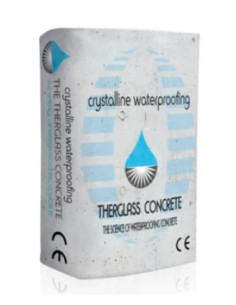
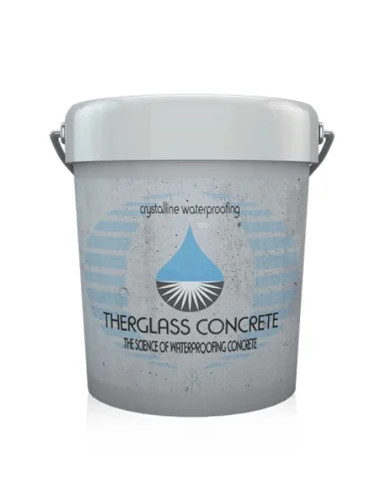
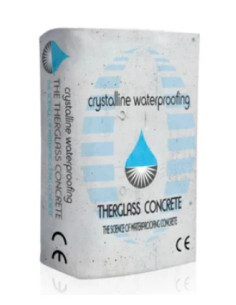
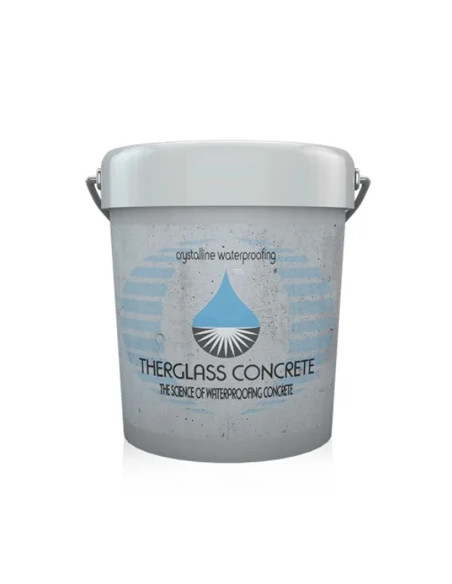
It is a single-component, polymer-modified cementitious slurry that is applied as a fast-setting grout.
One-component, fast-setting cementitious grout that, once applied and dried, creates a highly flexible and completely watertight coating membrane for waterproofing outdoor installations and swimming pools, for use under ceramic tiles, according to UNE EN 14891:2012+A1:2013, as well as a flexible waterproofing and protective cementitious coating for the repair and surface protection of concrete structures according to UNE-EN 1504-2:2005.
Support: The support must be strong and stable and free of dust, paint, oil, grease, etc. To do this, it must be cleaned, removing any traces of dust, liquids, chippings, etc.
Any residues of efflorescence and any other substances that could impair proper adhesion to the substrate must also be removed.
It is recommended to clean with sandblasting, pressurized water, mechanical brushing, etc.
Repair degraded areas and fill in gaps, hollows or joints to achieve a smooth surface, as well as in corners and angles by creating a half-round with TherGlass® Concrete REPAIR FAST H TX.
Saturate the substrate with low-pressure water to prevent it from absorbing water into the mix. It is recommended to do this several hours before applying the mortar. If the substrate cannot be saturated, it is recommended to at least wet it slightly to allow the mortar to adhere. Insufficient saturation could lead to loss of adhesion and dehydration of the grout.
Mixing: The recommended amount of water for a very fluid mix for first layers is around 30-33% by weight of the dry product; subsequent layers should be mixed with an amount close to or equal to 25-28% by weight of the dry product. It is recommended to start mixing with a portion of the planned water and blend the product at low speed for a few minutes.
The rest of the water will then be added until the required fluidity is obtained, mixing for a few minutes.
Mix with a slow electric mixer or a blender for several minutes, always until a smooth, homogeneous, lump-free paste is obtained. The material can tolerate higher or lower amounts of water than indicated without causing water to rise to the surface or solids to settle. Let stand for 3 to 5 minutes.
Application: Apply a first coat with a more fluid consistency, on the previously moistened surface, with a brush or roller. It is important to apply this first coat in the same direction.
After 2 hours, apply a second coat in a crosswise direction. It's not necessary to moisten the first coat unless the room temperature is very high, in which case, spray the applied surface with water to facilitate hydration of the product.
In the case of cracked substrates or those that may be subject to slight movements, it is recommended to place a fiberglass mesh appropriate to the applied thickness between each layer.
Cleaning tools and implements: When fresh, they can be cleaned with water. If the material has hardened, it can only be cleaned mechanically.
This indicated consumption is indicative and on smooth surfaces; however, exact consumption must be determined by taking samples on site.
Protect from sunlight and extreme temperatures. In tropical climates, the product should be stored in a cool place.
In cold climates the product should be stored at a temperature ≥ 5°C.
TherGlass® Concrete DRY SLURRY has a shelf life of 12 months from the date of manufacture, when stored properly and in its original packaging.
TherGlass® Concrete DRY SLURRY is an alkaline product, it contains cement.